Posts
Mentally Healthy Organizations: Building the Future Through Workplace Well-Being
By: Wendy Thelese Talley, DSW, MSW, LCSW
Thelese Consulting Group, LLC - Leadership Mastery Elite Academy
The global crisis in leadership we are currently facing is about the imbalance of the workplace's emotional and mental well-being. Organizations are experiencing emotional and mental imbalance caused by uncertainty, stress, and trauma. The World Health Organization (2022) reported that depression and anxiety cost the world economy $1 trillion annually in lost productivity. The American Institute of Stress reports that workplace stress costs U.S. businesses over $300 billion annually in absenteeism, turnover, and reduced productivity. Post-pandemic, mental health concerns are at an all-time high, with 76% of workers reporting at least one symptom of burnout (Gallup, 2024).
The Urgency of NOW
The future of work depends on organizations' ability to support the mental health of both individuals and their families. Trauma-informed care organizations go beyond providing wellness programs to integrate well-being into leadership, communication, and day-to-day operations. When leaders build psychological safety and emotional intelligence, they not only enhance performance but also preserve the human stock that fosters innovation and stability (Edmondson, 2019; Goleman, 2004). Leaders, we must remember that our workforce, who are human beings, give purpose and value to the bottom line.
Signs of an unhealthy workplace
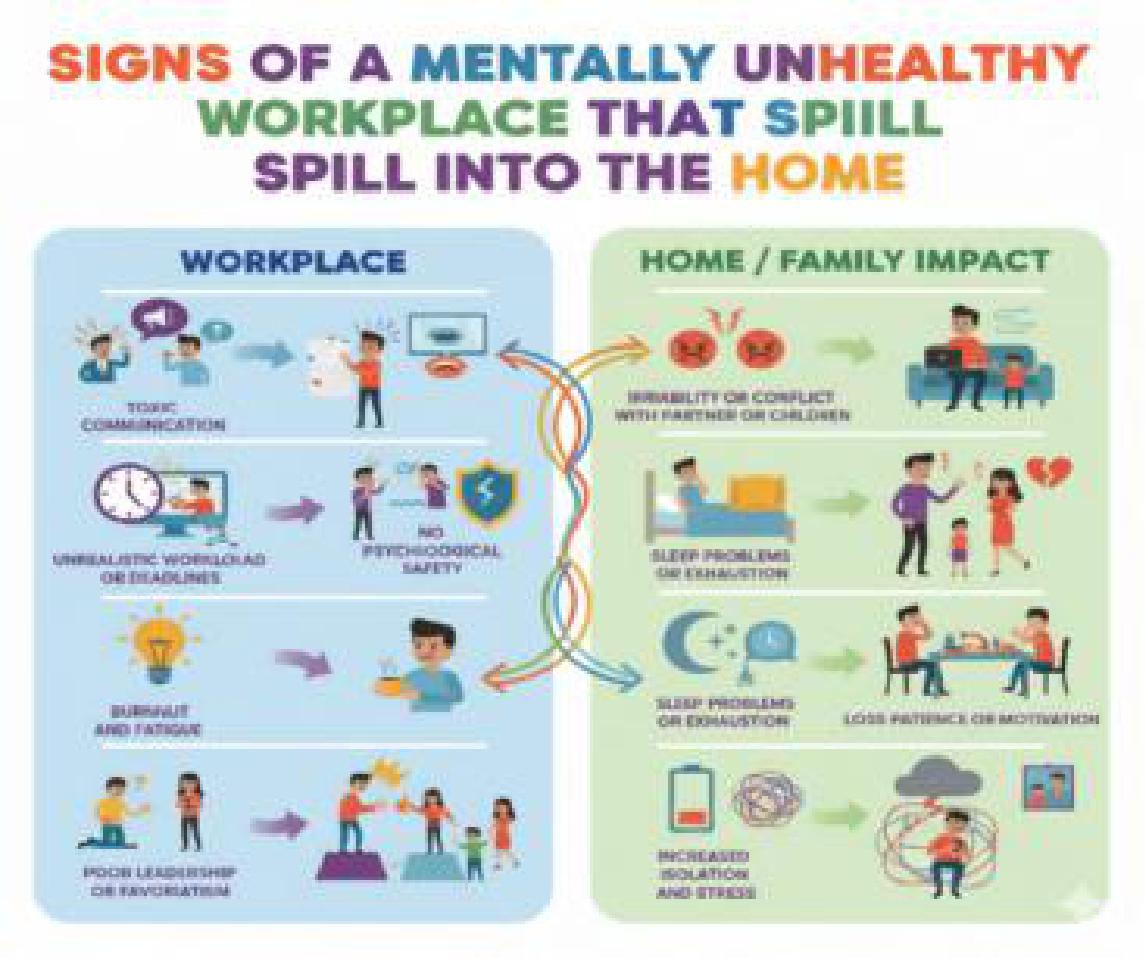
- A mentally unhealthy workplace does not stay at work—it follows people home.
- Workplace Signs of an unhealthy workplace
- Toxic communication breeds tension and fear.
- Unrealistic workloads create burnout and fatigue.
- Lack of psychological safety silences employees.
- Poor leadership and favoritism lower morale.
Home and Family Impact
- Irritability and conflict increase with loved ones.
- Sleep problems and exhaustion become constant.
- Loss of patience, motivation, and emotional connection.
- Isolation and stress rise, weakening family bonds
Generations of all kinds are still in the workplace.
The workforce today spans various generations—Baby Boomers, Generation X, Millennials, and Generation Z—each with distinct expectations, stress levels, and communication styles. Interactions with these require cultural competence and flexible leadership. Research shows that workplaces with cross-generational awareness experience increased engagement and lower burnout (Bakker & Demerouti, 2017). It is crucial to shift towards mental health as a shared value rather than an individual obligation, so that workers reap the rewards of a healthier working future.
Workshop with Dr. Wendy Talley:
Mentally Healthy Organizations: Building the Future Through Workplace Well-Being
This session will deliver strategies that are not just timely—they are mission-critical for any organization looking to thrive in the next decade. The content is designed to be practical and immediately applicable, ensuring that attendees will leave with actionable insights.
What attendees will experience:
During this workshop, attendees will experience powerful moments of reflection, connection, and practical learning. Attendees will delve into practical strategies for creating mentally healthy workplaces where individuals feel seen, supported, and inspired to grow. Expect honest conversations, interactive tools, and a renewed sense of hope for creating organizations that thrive—today and for generations to come.
What attendees will leave with:
- The Organizational Mental Health Blueprint
- Leadership Emotional Intelligence Toolkit
- Sustainable Wellness Integration Plan
The benefits of a mentally healthy workforce are not just theoretical; they are practical and promising. A mentally healthy workplace can lead to increased productivity, reduced turnover, and a more positive work environment. The question then is no longer, among today's professionals, whether mental health belongs at the workplace, but rather how openly we incorporate it into organizational consciousness to build long-term legacies between career and families.
Dr. Wendy Talley, LCSW
References (APA)
The Focus On Brain Health In Addressing Mental Health Issues. https://mail.thebusinesswatch.com/the-focus-on-brain-health-in-addressing-mental-health-issues/
Bakker, A. B., & Demerouti, E. (2017). Job demands–resources theory: Taking stock and looking forward. Journal of Occupational Health Psychology, 22(3), 273–285.
Edmondson, A. C. (2019). The fearless organization. Wiley.
Goleman, D. (2004). Emotional intelligence. Bantam.
Mental Health in the Modern Workplace: Addressing the Silent Crisis - No Worker Left Behind Inc... https://noworkerleftbehind.org/mental-health-in-the-modern-workplace-addressing-the-silent-crisis/
New 90 Minute Workshop “Resilient Mind Resilient Team” | EVOLVE. https://evolve.asuresoftware.com/blog/new-90-minute-workshop-resilient-mind-resilient-team/