The OAR Leadership Institute™
A Transformational Journey for Purpose-Driven Leaders
Developed by Dr. James C. Rodríguez, MSW
Author of I AM Going Anyway: The OAR Leadership Institute

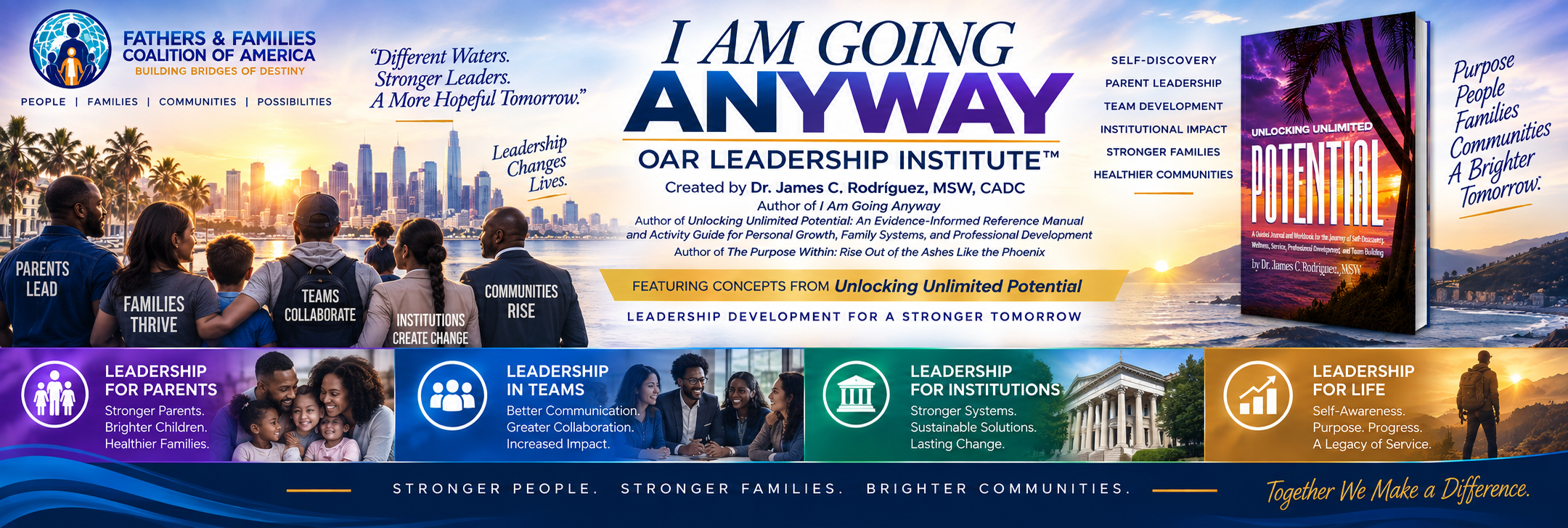
Leadership Is Not a One-and-Done Event. It Is a Journey of Becoming.
The OAR Leadership Institute™ is an adaptable, whole-person leadership-development experience designed for individuals, parents, practitioners, teams, managers, executives and organizations seeking something deeper than a disconnected seminar or motivational moment.
We begin with a simple belief: how we understand ourselves influences how we show up for other people. Leadership therefore begins before the title, before the strategy and before the meeting. It begins with identity, purpose, relationships, choices, accountability and the willingness to keep rowing when the current changes.
OAR is designed to move learning from personal discovery into relational leadership, team development, organizational capacity and community impact.
Oquendo. Arroyo. Rodríguez. A Family Legacy Became a Leadership Metaphor.
The name OAR honors three family lineages—Oquendo, Arroyo and Rodríguez—and the Puerto Rican heritage, resilience, responsibility and purpose carried through those names.
The metaphor reaches far beyond one family. An oar represents effort and agency. It creates propulsion and direction. It requires balance. And a rower often moves forward while remaining aware of where they have been.
Ownership • Accountability • Responsibility
The OAR experience asks leaders to move beyond simply identifying what is wrong around them and toward examining what they can influence, strengthen, repair, build and sustain.
What Is Mine to Carry?
Recognize your values, decisions, behaviors, strengths, limitations and capacity to influence what happens next.
What Does My Leadership Produce?
Examine the relationship between intention and impact, commitments and follow-through, and leadership behavior and the experiences of other people.
What Will I Do With What I Now Know?
Translate reflection into purposeful action—for yourself, your family, your team, your organization and the communities your leadership touches.
True Leadership Development Does Not End When the Facilitator Leaves the Room.
FFCA's approach is intentionally adaptable. We do not believe in dropping a rigid, pre-packaged program into an organization and assuming that every workforce, parent group, leadership team or community needs the same experience.
Depending upon the engagement, OAR can become part of a broader capacity-building pathway that begins with discovery and customization, moves through facilitated learning and application, and can continue through coaching, co-facilitation, evaluation and sustainability planning.
Leadership Happens Everywhere.
OAR can be adapted for the different places where people influence lives, make decisions, build relationships and shape the future.
Strengthen self-awareness, relationships, family voice, confidence and parent leadership.
Strengthen communication, collaboration, accountability, trust and shared responsibility.
Connect workforce development with organizational learning, implementation and sustainable capacity.
Explore identity, purpose, resilience, progress, relationships and a legacy of service.
Impact • Influence • Inspiration
Leadership is not measured only by what someone knows. OAR invites participants to examine what their leadership creates in themselves, in other people and in the systems around them.
What Changes Because I Was Here?
Participants examine how leadership decisions, communication, relationships and behaviors influence families, teams, organizations and communities.
How Do People Experience My Leadership?
Titles may establish authority. Relationships establish influence. OAR explores trust, emotional intelligence, communication and the responsibility that accompanies influence.
What Becomes Possible for Someone Else?
Leadership reaches another level when it creates conditions in which other people can discover their strengths, develop their voice and participate in building what comes next.
Your People Should Not Have to Fit Into Our Program. We Can Shape the Experience Around Your People.
Every year, Fathers and Families Coalition of America makes OAR and related leadership-development experiences available for organizations to contract and customize.
Some partners need a focused conference institute. Others need staff development, manager and director training, parent leadership, team building, a leadership summit, or a longer implementation pathway combining in-person and virtual learning.
The foundation remains consistent while the application can change: whole-person development, relationships, purpose, communication, leadership practice and sustainable capacity.
Different Audiences. Different Settings. A Leadership Framework Built to Adapt.
Recent engagements illustrate how FFCA has adapted OAR-related leadership development across organizational, family, workforce and conference settings.
Customized Leadership Development Across Three Organizations
In 2025, FFCA was contracted by three organizations, including a major nonprofit and two Head Start programs, to provide customized leadership-development experiences. Rather than delivering an identical program in every environment, the learning was adapted to the audience, organizational priorities and intended outcomes.
International Families & Fathers Conference
OAR leadership-development concepts were provided through FFCA's International Families & Fathers Conference, extending the institute to a multidisciplinary audience of family-serving professionals, leaders and community stakeholders.
Staff, Family & Leadership Applications
During 2026, components of the leadership framework were also adapted for a Fathers and Families Leadership Summit, a January staff leadership-development engagement for a major nonprofit, and the Strengthening Families Through Nurturing Leadership™ initiative in October.
Head Start Leadership Development in San Juan, Puerto Rico
The framework also supports customized Head Start applications, including parent peer leadership development and a contracted Managers & Directors Leadership Institute for the Region II Head Start Association in San Juan, Puerto Rico.
In Person. Virtual. Hybrid. Built for the People You Need to Reach.
FFCA has used both in-person and live virtual professional development to connect participants across the United States. Delivery can be structured around geography, organizational capacity, learning goals and the depth of implementation desired.
Experiential learning designed for conferences, staff development, leadership retreats, parent programs and organizational institutes.
Facilitated sessions that expand geographic access while preserving interaction, reflection, discussion and application.
Combine in-person learning with virtual follow-up, coaching, implementation conversations and continued leadership development.
You Do Not Need an Executive Title to Begin Leading Differently.
OAR can meet people at different stages of their leadership journey—from personal and parent leadership to practitioner, management, executive and organizational development.
From Understanding Self to Strengthening Relationships and Creating Vision.
The OAR Leadership Institute™ is organized around a progressive learning journey. Participants begin by looking inward, then explore leadership practice, move into vision and intentional direction, and deepen the relational capacities required to lead other people.
Identity • self-awareness • emotions • purpose • reflection
Values • character • behavior • DiSC • accountability
Vision • meaning • goals • direction • intentional action
Trust • emotional intelligence • listening • connection
The detailed course outline explores the activities, assessments, theoretical influences and applied practices within each module.
I Am Going Anyway.
The Question Is: Where Is Your Leadership Taking You?
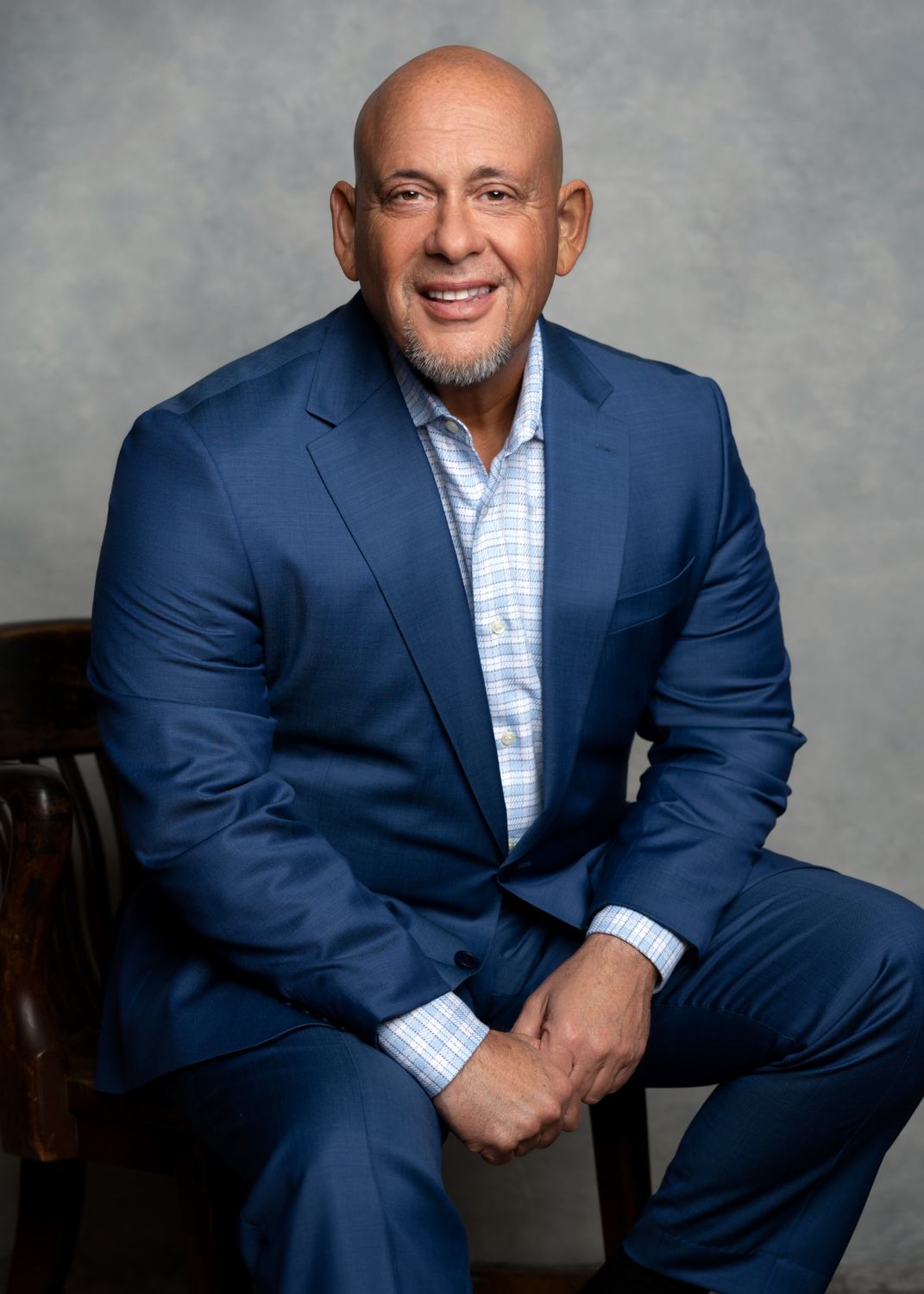
Leadership has never been abstract to me. I have experienced it through military service, social work and human-services practice, father and family engagement, nonprofit leadership, teaching, coaching, community development, and the responsibility of helping other people discover what they carry within.
Across those experiences, one lesson continues to surface: leadership is not simply something we do. Leadership is something other people experience through us.
That is why the OAR Leadership Institute™ is not designed to tell you that there is only one way to lead. It creates space for us to examine who we are, what shaped us, how we communicate, how we affect other people, what gives our leadership meaning, and what we are prepared to do with the opportunities and responsibilities in front of us.
Whether you are an executive strengthening organizational culture, a manager developing people, a practitioner serving families, a parent discovering your leadership voice, an emerging leader, or an individual determining your next courageous step, there is a place for you in this journey.
FFCA can customize the OAR Leadership Institute™ for your conference, leadership summit, executive or management team, staff-development initiative, parent leadership program, managers and directors institute, team-building experience, or broader organizational capacity-building effort.
“Purpose gives us direction. People give leadership meaning. Practice turns intention into impact.”
Fathers and Families Coalition of America
Creator, OAR Leadership Institute™
Do Not Settle for Another Leadership Seminar When You Can Build a Leadership Journey.
OAR is an invitation to move beyond representation toward participation, beyond information toward application, and beyond a single training event toward leadership development that can continue inside families, teams, organizations and communities.
Purpose gives us direction. People give leadership meaning. Practice turns intention into impact.
Whether you are seeking leadership development for yourself or building capacity across an entire organization, the next step does not have to look exactly like the last one. We can design the experience around where you are, who you serve and where you are trying to go.
The OAR Metaphor – A Philosophy in Motion
The OAR Leadership Institute™ is built on a metaphor that is at once deeply personal and universally transformative. O.A.R. stands for Oquendo, Arroyo, Rodríguez—a lineage of resilience, faith, and purpose rooted in Puerto Rican heritage. This acronym is more than a family tribute; it is a guiding symbol of how individuals navigate their journey through life, leadership, and legacy.
Just as a single oar determines the direction and movement of a small boat, leadership is the tool we use to steer the course of our lives, our teams, and our communities. In a world full of turbulent waters, the OAR becomes a philosophy of motion:
- Effort & Agency: The oar is not powered by the waves, nor carried by the wind—it is driven by the one who chooses to row. Leadership demands agency and participation.
- Propulsion & Direction: Beyond movement, the oar gives us the ability to navigate and steer—even when the current resists. Leaders must apply both effort and intention.
- Balance & Design: The oar’s blade is curved not by accident but by function—it offers equilibrium and forward thrust. So too must leadership offer balance between strength and empathy, past and future, self and community.
- Reflection & Navigation: A rower moves forward by looking back, adjusting course based on where they’ve been. Leadership is a call to remain present while learning from history.
Whether you're kayaking off the southern coast of Puerto Rico or rowing upstream through life’s adversities, the OAR reminds us: destiny is not a matter of chance, but of chosen direction. This philosophy is the soul of our Leadership Institute. It teaches that greatness isn’t reserved for the few, but ignited in those who are willing to row with vision, purpose, and legacy in hand.
“The current may be swift, but the one who rows with purpose shall always find their shore.” — Dr. James C. Rodríguez, MSW
The OAR Leadership Institute™
A Transformational Journey for Purpose-Driven Leaders — Developed by Dr. James C. Rodríguez, MSW
Cost Comparison & Value Proposition
The OAR Leadership Institute™ was designed with a firm commitment to those who serve others — especially professionals in the nonprofit, public, and community service sectors. Our leadership training is not about competing with others; it's about standing with our stakeholders, affirming that excellence in leadership should be accessible, actionable, and deeply rooted in community values.
We are committed to delivering a high-impact experience at a fraction of the cost of other programs — without compromising quality, depth, or interactivity. Our hybrid delivery format — live, interactive, and accessible — reflects our core belief: effective leadership begins with inclusive, hands-on learning.
| Leadership Program | Format | Avg. Duration | Estimated Cost | Includes Live Training? |
|---|---|---|---|---|
| OAR Leadership Institute™ | Live / Interactive / Hybrid | 4 Weeks + Optional 30-Day Plan | $295–$350 | ✔️ Yes |
| National Leadership Certificate (Generic) | Online / Self-Paced | 6–12 Weeks | $1,250–$3,500 | ✖️ No |
| University-Based Leadership Certificate | Online / Hybrid | 8–16 Weeks | $2,800–$7,500 | Sometimes |
With our unique curriculum integrating cultural wisdom, trauma-informed theory, and globally respected leadership models, OAR Leadership Institute™ provides a cost-effective and transformational experience. It’s more than training—it’s a journey of purpose.
© 2025 The OAR Leadership Institute™
Empowering Purpose-Driven Leadership – Rooted in Legacy, Propelled by Vision.
Developed by Dr. James C. Rodríguez, MSW
Module I: Before Understanding Others – Let’s Understand Ourselves
Great leadership begins within. This foundational module invites participants to pause and reflect deeply on who they are—before stepping into the responsibility of leading others. Through a series of introspective activities, narrative exercises, and evidence-based assessments, participants begin the journey of self-leadership.
Inspired by Viktor Frankl’s “Man’s Search for Meaning,” Angela Duckworth’s “Grit,” and the philosophies of Ikigai and Wabi Sabi, this module centers on developing a grounded sense of purpose and emotional awareness. We believe that before a leader can inspire others, they must first be able to navigate their own thoughts, feelings, values, and personal history.
Key Learning Objectives
- Develop self-awareness through guided narrative and reflection
- Explore personal values, life story, and decision-making patterns
- Recognize emotional intelligence as the cornerstone of leadership
- Understand the neuroscience of behavior and belief systems
Core Workbook Activities & Applied Practices
| Activity Title | Purpose | Integrated Concepts |
|---|---|---|
| Let Me Think of Life (Icebreaker) | Initiates self-reflection, builds openness, and deepens group rapport through symbolic imagery. | Reflective leadership, metaphorical thinking |
| Translating Emotions in Time – Ichigo Ichie | Connects past, present, and future self through emotional clarity and the philosophy of “one moment, one encounter.” | Mindfulness, time perception, Japanese aesthetics |
| Emotional Intelligence and Leadership Styles Inventory | Guides participants to assess and understand their emotional triggers, leadership tendencies, and interpersonal responses. | Goleman’s EQ, self-regulation, empathy, self-assessment |
| Kintsugi: Strength in Imperfection | Introduces the metaphor of mending brokenness with gold—seeing flaws as sources of beauty and strength. | Resilience, self-worth, trauma-informed healing |
| Meet Me in Ten Years | Participants visualize and script a future version of themselves, establishing long-term goals and vision alignment. | Visioning, cognitive-behavioral psychology, goal anchoring |
Theoretical Wraparound & Foundational Influences
- Man’s Search for Meaning – Viktor Frankl’s existential logotherapy supports deep exploration of purpose and pain.
- Grit – Angela Duckworth’s work informs the practice of perseverance and internal motivation through adversity.
- Ikigai – Garcia & Miralles’ philosophy cultivates holistic purpose through what we love, what we’re good at, and what the world needs.
- Wabi Sabi – Suzuki’s reflections remind leaders of the profound value in imperfection and change.
- The Body Keeps Score Workbook – Selected reflective exercises help participants connect trauma awareness to emotional leadership.
This module sets the spiritual and emotional tone of the OAR Leadership Institute™. It asks leaders to first show up authentically—with a deepened relationship to self—before they seek to guide others. It is not about perfection; it is about presence, process, and power within.
Module II: The Building Blocks of Leadership – A Guided Conversation
Once individuals have deepened their self-awareness in Module I, we guide them into the essential structures that create effective, ethical, and enduring leadership. This module provides a comprehensive framework rooted in best practices from military leadership academies, nonprofit excellence, and classical philosophy.
Drawing from John Wooden’s Pyramid of Success, Angela Duckworth’s “Grit,” and John C. Maxwell’s “High Road Leadership,” we introduce timeless principles that help participants shape their leadership philosophy, strengthen their character, and navigate complex team dynamics.
Key Learning Objectives
- Explore foundational leadership values and behaviors using the Pyramid of Success
- Understand the role of personal ethics, legacy, and responsibility in leadership
- Develop a working knowledge of High Road vs. Low Road behaviors
- Integrate diverse leadership styles with the DiSC FFCA™ Leadership Model
- Utilize guided conversations for emotional intelligence in action
Core Workbook Activities & Applied Practices
| Activity Title | Purpose | Integrated Concepts |
|---|---|---|
| DiSC Personality Reflection | Participants assess and apply their DiSC profile to leadership settings. | DiSC Model, behavior modification, communication |
| High Road vs. Low Road Reflection | Compare and contrast ethical leadership vs. reactionary decision-making. | Maxwell’s High Road Leadership, integrity, influence |
| The Pyramid of Success Reflection | Utilizes John Wooden’s pyramid to help participants evaluate current strengths and growth areas. | Character traits, performance, legacy building |
| Legacy Line | Maps generational leadership patterns, strengths, and obstacles to elevate intentional legacy shaping. | Intergenerational leadership, systems thinking, values transmission |
| Leadership Compass Assessment | Encourages directional awareness of leadership style, flexibility, and needed allies on the journey. | Team dynamics, self-efficacy, directionality |
Theoretical Wraparound & Foundational Influences
- The John Wooden Pyramid of Success – Offers timeless principles of leadership, hard work, and personal excellence.
- High Road Leadership – John C. Maxwell’s framework emphasizes integrity, compassion, and elevating others.
- Maximizing Your Potential – Myles Munroe’s insights on legacy, purpose, and divine alignment in leadership roles.
- GRIT – Angela Duckworth’s research informs leaders how to persevere with passion and consistency over time.
This module helps leaders move beyond emotion into structure—building confidence in their leadership identity and their path. It cultivates accountability, deep alignment with one’s values, and commitment to taking the high road, especially in challenging environments.
Module III: Creating Our Vision to Envision
Vision without a map is just a dream. In Module III, participants synthesize their internal reflections and leadership values into a powerful forward-focused vision. This module activates intentional goal-setting, future planning, and collective visioning—designed to help leaders move from “why” to “how” with clear direction.
Through time-lapse reflection, guided journaling, and Ichigo Ichie practices, this section invites leaders to see every moment as a portal to transformation. Participants leave with a tangible framework for short- and long-term change, both personally and organizationally.
Key Learning Objectives
- Craft an authentic leadership vision statement
- Explore time-lapse mapping for personal and professional milestones
- Engage in Ichigo Ichie practices to identify what truly matters
- Develop meaningful, measurable short- and long-term goals
- Apply legacy-building techniques through values-based planning
Core Workbook Activities & Applied Practices
| Activity Title | Purpose | Integrated Concepts |
|---|---|---|
| Time-Lapse Mapping | Track pivotal life experiences and create a leadership timeline with intention. | Visioning, narrative therapy, behavioral goal tracking |
| Ichigo Ichie Vision Journal | A daily ritual practice to reflect on and shape meaning from lived moments. | Mindfulness, intentional leadership, emotional processing |
| Meet Me in 10 Years | Participants write a letter to their future self, envisioning leadership legacy. | Self-actualization, logotherapy, long-range leadership planning |
| Victory Statement Workshop | Craft powerful declarations that define success and drive execution. | Cognitive behavioral strategy, language reframing, commitment |
| Focus Mapping for Goals | Visually organize priorities and energy allocation aligned with core values. | Strategic planning, values-driven leadership, resource management |
Theoretical Wraparound & Foundational Influences
- Ichigo Ichie – The Japanese principle of cherishing each unrepeatable moment, fostering mindful vision setting.
- Ikigai – Clarifies purpose by aligning what you love, what you’re good at, what the world needs, and what you can be paid for.
- Man’s Search for Meaning – Viktor Frankl’s logotherapy drives the importance of future-oriented meaning-making.
- Maxwell’s Law of Intentionality – Personal growth and vision are not accidental—they are deliberate acts.
Module III helps participants move beyond ambition into legacy. It allows leaders to reimagine their impact by charting a path that is not only visionary—but deeply human and personally meaningful.
Module IV: Fostering Stronger Relationships
Leadership is not just about vision and strategy—it is about people. Module IV brings together the emotional, relational, and cultural intelligence necessary to lead with empathy, build trust, and sustain resilient teams. This module is the culmination of the OAR Leadership Institute™ journey, focusing on deepening human connection as the cornerstone of transformational leadership.
Participants will apply interpersonal tools to foster environments where individuals feel seen, valued, and safe. By embracing vulnerability, cultural humility, and emotional literacy, this module transforms how leaders interact—with themselves and with others.
Key Learning Objectives
- Develop trust-centered communication practices
- Strengthen emotional literacy and relational empathy
- Identify and transform trauma bonding patterns
- Utilize active listening and cultural awareness in leadership
- Apply strategies for nurturing inclusive and collaborative teams
Core Workbook Activities & Applied Practices
| Activity Title | Purpose | Integrated Concepts |
|---|---|---|
| Emotional Intelligence & Relationships | Examine and apply key components of emotional intelligence in personal and professional interactions. | Goleman’s EI Model, social-emotional leadership, active empathy |
| Translating Emotions with Ichigo Ichie | Utilize time-bound mindfulness practices to understand and articulate emotions in real time. | Mindful leadership, emotional articulation, stress navigation |
| Relational EQ Scenario Mapping | Explore leadership scenarios where emotional misalignment caused conflict, and practice resolution strategies. | Trauma-informed relational practices, EI, situational leadership |
| The Ten Relationship Values™ | Explore ten foundational values that foster stronger, more intentional relationships in leadership and life. | Relational values, integrity-based leadership, belonging |
Theoretical Wraparound & Foundational Influences
- Daniel Goleman’s Emotional Intelligence – A foundational model for leading with self-awareness, empathy, and relational skill.
- Love Languages by Dr. Gary Chapman – Understanding diverse emotional expressions to foster trust and connection.
- Schema Therapy – Recognizing early maladaptive patterns that can hinder relationship building and leadership growth.
- Five Tenets of Trauma-Informed Care – Safety, trust, empowerment, collaboration, and choice applied to leadership relationships.
Module IV anchors the OAR Leadership Institute™ in the sacred space of connection. Relationships are the soil from which sustainable leadership grows—and this module empowers each leader to till that soil with care, consciousness, and clarity.
Post-Course 30-Day Leadership Plan
As a unique and valuable bonus, graduates of the OAR Leadership Institute™ are invited to participate in an exclusive 30-Day Leadership Plan experience powered by our franchise relationship with The John R. Wooden Course®. This post-course phase provides participants with a personal growth tool that reinforces everything learned during the four core modules.
The Pyramid of Success: Individual Assessment
Every leader who enrolls in this add-on will complete a robust personal assessment built around John Wooden’s Pyramid of Success. The tool consists of 100 questions across 25 categories, with results ranked to help identify core behavioral strengths and key growth areas.
| Component | Description |
|---|---|
| Pyramid Assessment | 100-question evaluation covering 25 categories based on Coach Wooden’s blocks of success. |
| Strengths & Weaknesses | Ranked output helps leaders understand where they currently thrive and where targeted development is needed. |
| Learn & Apply Section | Engaging reflection and learning activities for each Pyramid block, promoting actionable growth. |
30-Day Implementation Path
Participants are encouraged to integrate their Pyramid results into a custom leadership action plan, which includes:
- Identifying two leadership behaviors to refine each week
- Committing to daily leadership reflection using the OAR Leadership Journal™
- Engaging in one meaningful conversation per week using the “Guided Leadership Conversations” worksheet
- Weekly check-ins using the DiSC™ personal communication lens
- Final reflection and review at Day 30 to document growth, legacy goals, and next steps
This powerful leadership enhancement is optional but highly encouraged. It supports participants in taking the teachings of the OAR Leadership Institute™ beyond the classroom and into daily transformational practice.
Supplementary Resources & Workbook Activity Integration
The OAR Leadership Institute™ is not a static leadership training—it is a multi-dimensional, immersive experience that integrates timeless wisdom, modern behavioral science, and culturally relevant frameworks. The following supplementary resources and workbook activities are meticulously selected to support and enrich each module, anchoring key concepts in lived learning.
Core & Supplementary Readings
| Title | Author(s) | Relevance |
|---|---|---|
The I Am Going Anyway OAR Leadership Institute ManualFoundational manual authored by Dr. James C. Rodriguez, MSW, guiding every element of the course. |
Dr. James C. Rodriguez, MSW | Foundational guide for all modules |
High Road LeadershipJohn Maxwell’s principles are infused in Module II to elevate ethical decision-making and integrity in action. |
John C. Maxwell | Used in guided conversations in Module II |
Maximizing Your PotentialMyles Munroe’s legacy work aligns with personal growth, vision, and calling—especially emphasized in Module III. |
Myles Munroe | Supports legacy and potential building in Module III |
The Body Keeps the Score (Workbook)Trauma-informed leadership begins with self-awareness; this workbook supports Modules I & IV. |
Bessel van der Kolk | Informs trauma-awareness in Module I & IV |
Ikigai, Ichigo Ichie, Kintsugi, Wabi SabiEastern philosophies that shape mindfulness, resilience, and legacy across the OAR journey. |
García, Miralles, Navarro, Koren | Embedded in all modules, especially III and IV |
Universal Language DISC Reference ManualThis in-depth guide supports participants’ analysis of behavioral tendencies and leadership style. |
PeopleKeys/TTI | Behavioral profiling in Module II |
The Pyramid of SuccessParticipants use this for post-course leadership planning through our franchise with The John Wooden Course®. |
Coach John Wooden | Post-course leadership integration |
Workbook Activities by Module
(All original activities developed by Dr. James C. Rodriguez, MSW)
| Activity Title | Module | Purpose |
|---|---|---|
Let Me Think of Life (Icebreaker)Fosters an atmosphere of trust, openness, and reflection in Module I. |
Module I | Establish self-reflection and relational insight |
Translating Emotions in Time: Ichigo IchieGuides leaders in recognizing the power of now and uniqueness of each interaction. |
Module I | Understanding presence and impermanence |
DiSC Personal Profile (FFCA Model)Provides personalized insight into communication and leadership style. |
Module II | Identify leadership style and behavior mapping |
Building Blocks of LeadershipUses Wooden’s Pyramid & military training paradigms for ethical leadership planning. |
Module II | John Wooden & Armed Forces fusion |
Applying Kintsugi Philosophies in PracticeEncourages healing through embracing flaws and transformative resilience. |
Module III | Embracing imperfection as strength |
Emotional Intelligence Impacting RelationshipsStrengthens empathy, regulation, and interpersonal leadership. |
Module IV | Self-awareness and relational impact |
Ethos in AdversityLeaders explore identity and character when navigating crisis or opposition. |
Module IV | Leadership responses in crisis |
Each activity is strategically placed to enhance reflection, dialogue, and internalization. They allow leaders to integrate core principles—whether cognitive, emotional, behavioral, or spiritual—into tangible actions that extend well beyond the course itself.
Ready to Lead with Purpose?
Take the next step—use these tools to craft your legacy of leadership. The journey starts with action.